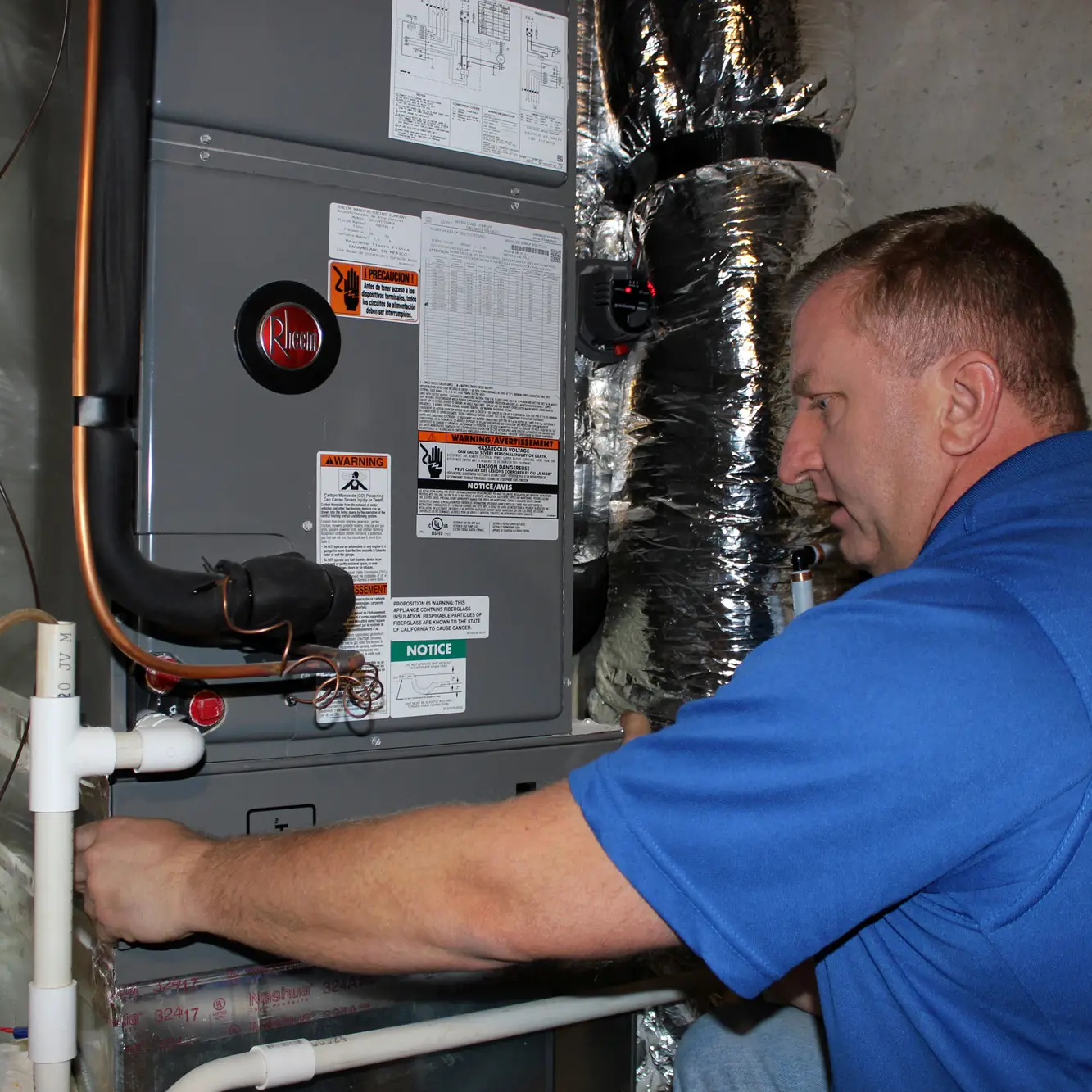
The best time to find a furnace problem is before the first cold night, not during it. A fall heating tune-up checks your system for safety, cleans and adjusts the parts that wear, and catches small problems while they’re still cheap to fix. Here’s when to schedule heating maintenance in Asheville, what the visit covers, and what you can handle yourself between visits.
When should you schedule heating maintenance in Asheville?
American Air recommends scheduling heating maintenance in September or early October, before you need the heat every night. In the Asheville area, that window closes fast. At Asheville Regional Airport, the average first freeze arrives around October 28, and in about one year out of ten it comes by mid-October (NOAA 1991-2020 normals). Once the first cold snap hits, every HVAC company in town gets busy at the same time.
If you’re reading this after the weather has already turned, it’s not too late. A tune-up in November or December still checks the system for safety and gets it ready for the coldest stretch of winter, which usually runs from December through February here.
What does a heating tune-up include?
An American Air heating tune-up is a top-to-bottom inspection, cleaning, and adjustment of your heating system. On a gas or propane furnace, our technicians:
- Inspect the heat exchanger for cracks or damage
- Test the ignition system and check gas pressure
- Check the flue and venting so combustion gases leave the house
- Tighten electrical connections and test safety controls
- Inspect and clean the blower and check the motor
- Check the air filter and replace it if needed
- Check thermostat calibration so the system turns on and off when it should
On a heat pump, the visit also covers the outdoor unit and the backup electric heat that kicks in on the coldest days. If we find a problem, we’ll explain what it is, what it costs to fix, and whether it can wait.
Is it safe to turn on your furnace before it’s been checked?
Usually, yes, if your furnace ran without problems last winter and has been maintained regularly. A faint burning-dust smell for the first few minutes is normal. That’s dust burning off the burners and heat exchanger after a summer of sitting idle, and it should fade quickly.
Turn the furnace off and call for service if you notice any of these:
- Your carbon monoxide alarm goes off. Get everyone outside and call 911 or the fire department.
- You smell gas. Leave the house, then call your gas utility or propane supplier from outside.
- A burning plastic or electrical smell that doesn’t go away.
- The furnace turns on and off every few minutes or won’t stay lit.
Carbon monoxide has no smell or color, which is why a working CO detector and a heat exchanger inspection both matter.
Why does heating maintenance matter?
Regular heating maintenance keeps your system safer, more reliable, and less expensive to run. Dirty burners, a clogged filter, or a weak part makes a furnace work harder for the same heat. Over a winter, that shows up on your gas, propane, or power bill.
Maintenance also cuts down on breakdowns. We find that a lot of no-heat calls in winter trace back to problems a tune-up would have caught, such as a failing igniter, a dirty flame sensor, or a loose wire. Catching those in October costs less than an emergency visit on a January night.
Finally, a well-maintained system lasts longer. Most gas furnaces last 15 to 20 years. Annual care helps yours reach the long end of that range instead of needing an early replacement. If your system is already near the end, the tune-up gives you time to plan, and our guide on when it’s time to replace your furnace can help you weigh repair against replacement.
What can you do between maintenance visits?
A few simple habits keep your heating system running well and your home warmer for less:
- Change the air filter every one to three months during heating season. A dirty filter restricts airflow and makes the system work harder.
- Test your carbon monoxide detectors and replace the batteries each fall.
- Keep the area around your furnace clear, especially of anything flammable.
- Keep supply vents and return grilles open and unblocked by furniture or rugs.
- Seal drafts around doors and windows with weatherstripping or caulk.
- Run ceiling fans clockwise on low in winter to push warm air back down from the ceiling.
- Open blinds on sunny days and close them at night to hold the heat in.
If you feel warm air leaking from ductwork in the attic or crawlspace, that heat is going to waste. Sealing and insulating ducts is a job for an HVAC contractor.
What does the American Air maintenance plan include?
The American Air maintenance plan covers two inspections a year, one before heating season and one before cooling season. Members also get a 10% discount on parts and priority emergency service, which matters most during a cold snap when everyone needs help at once.
For a system you plan to keep for years, the plan is the simplest way to make sure maintenance actually happens on schedule. See maintenance plan details or call us to sign up.
Frequently Asked Questions
How often should a furnace be serviced?
A gas or propane furnace should be serviced once a year, ideally in the fall. Heat pumps run year-round for both heating and cooling, so they’re best checked twice a year, in spring and fall. The American Air maintenance plan includes both visits.
How long does a heating tune-up take?
A routine heating tune-up typically takes about an hour. It can run longer if the system is especially dirty or the technician finds a part that needs repair.
Does a heat pump need maintenance in the fall?
Yes. A fall check makes sure the heat pump switches to heating correctly, the outdoor unit is clean and clear, and the backup heat works before the coldest days. Because heat pumps work all year, they benefit from a spring visit too.
What happens if the technician finds a cracked heat exchanger?
American Air shuts the furnace off and explains your options. A cracked heat exchanger can leak carbon monoxide into your home, so the furnace shouldn’t run until the heat exchanger or the furnace is replaced. On an older furnace, replacing the whole unit is usually the better value.
Get Your Heating System Ready for Winter
Don’t wait for the first freeze to find out your furnace has a problem. Schedule a heating tune-up with American Air, and we’ll make sure your system is safe, efficient, and ready for an Asheville winter. Call (828) 665-8000 or request service online. If your heat goes out, we’re on call 24/7 for heating repair.
